


Few traditions in Spain confuse foreign visitors as much as Holy Week (Easter).
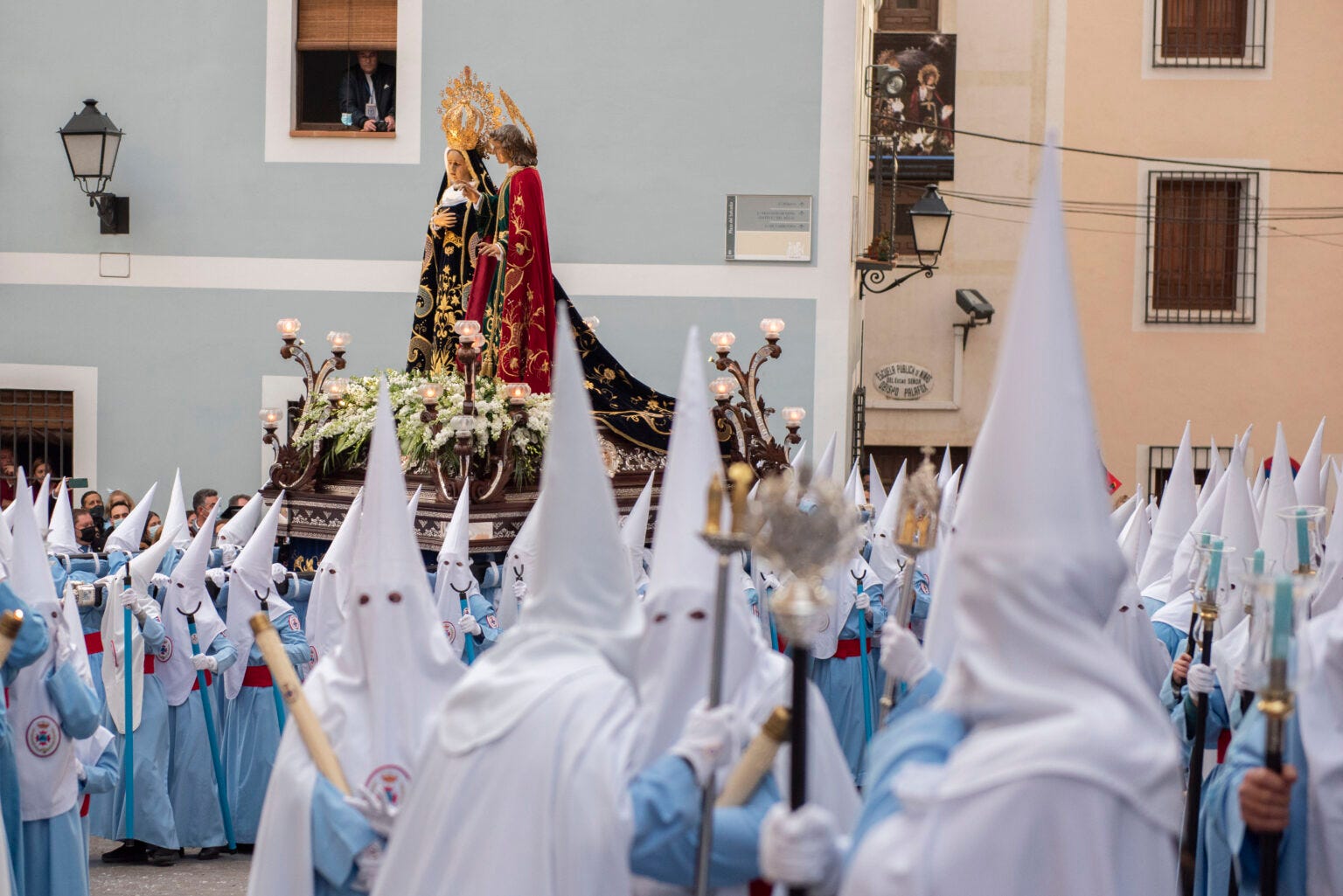
If you’re not from Spain, Easter here can look almost unbelievable. In the middle of the day, or late at night, you will see entire cities get flooded by hooded figures wearing long robes and pointed hats, followed by dramatic orchestras in some cases, and by candles and silence in others. Behind them come enormous floats with sculptures of Christ bleeding, the Virgin Mary crying, Roman soldiers, crosses, gold, silver, velvet, etc…
In other words: filled with drama.
Incense fills the air of the streets that the rest of the year host the urban life of Spanish cities. Balconies become grandstands, and the whole environment becomes a flash show of drama, religion, feelings and festivity. And somewhere in the middle of all that, which storms the city without any warning, a foreign tourist looks around and thinks:
“What on Earth is going on here?”
For many outsiders, especially Americans, the most shocking part is often the pointed hood. It can look disturbingly similar to the Ku Klux Klan to them, although that association is completely wrong.
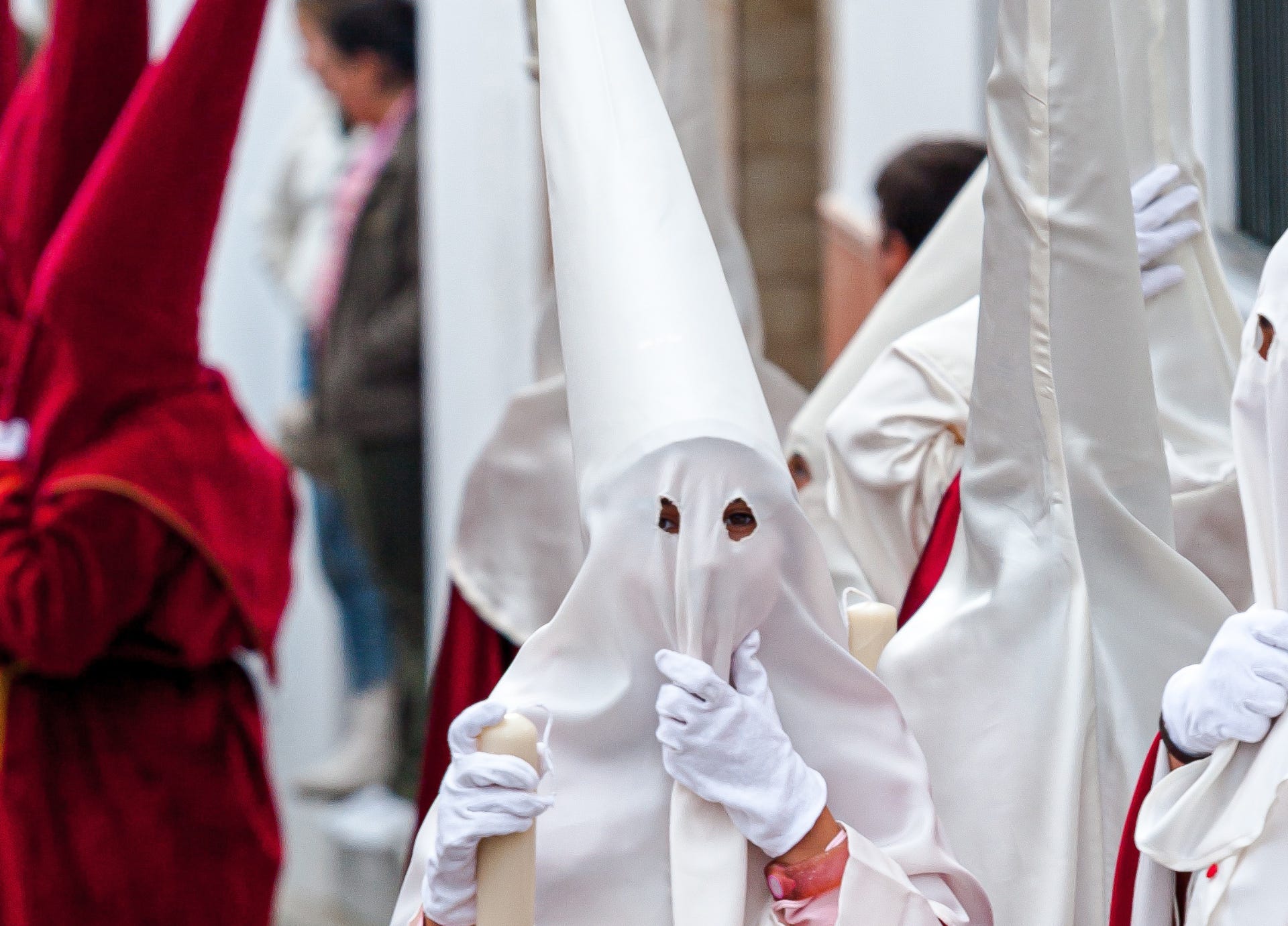
In Spain, this tradition has nothing to do with race, hatred, or anything remotely close in that sense. What you are seeing is much older than the KKK, which dates back to the mid 1800s. Spain’s Holy Week tradition is centuries older than that.
A piece of a former world
In Spain there are many traditions that look weird. Carnival in small towns, jumping over babies, demons with fire, fallas, Holy Week, etc… For most tourists, and even for locals who don’t understand how these originated and what they represent, they look weird, or even stupid.
However, I like to think of them as a fragment of an ancient world that made it to our days. Rather than something too old fashioned to be kept, I think it’s beautiful how these traditions made their way into modern life in the 21st Century. I think it’s a bit of a shame how little of the original meaning is kept nowadays in many traditions, but I’m happy they survived.
They offer a chance to understand how people used to live in a place, and what mattered back then, which is often different to what matters today, and could serve as an answer when nothing matters anymore. The case of Holy Week is a bit different as its meaning is not as altered since its origins as in other traditions.
A festival that doesn’t look like a festival
Part of what makes Spanish Holy Week so strange to outsiders is that it doesn’t behave like the typical modern celebration that you may find in Spain during the rest of the year. Most of these festivities are easy to read, because people look happy and they eat, drink, and dance. So it’s evident that something is being celebrated, although usually it can be hard to tell what or why. Outsiders can often recognise the mood.
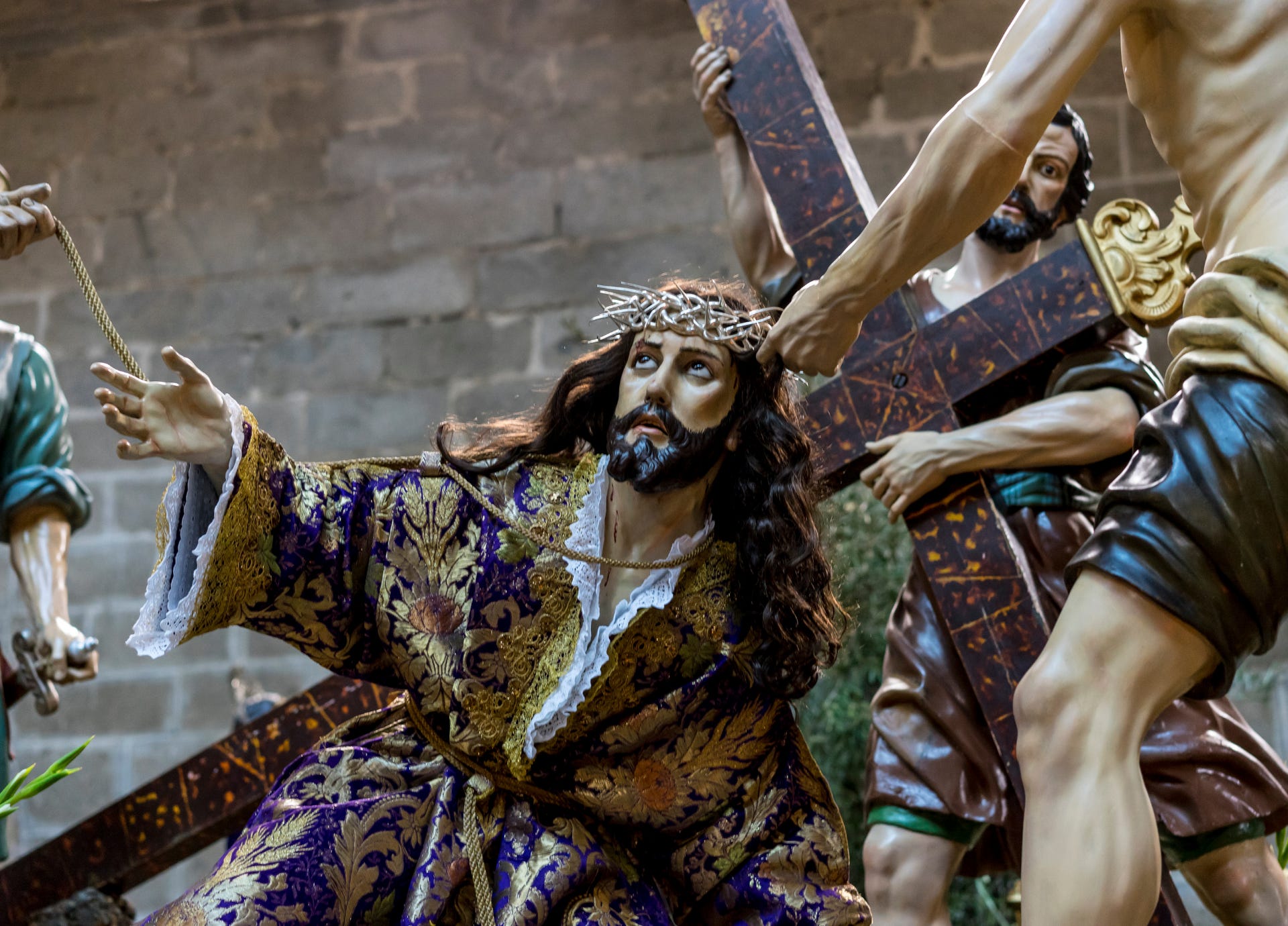
Holy Week is different. It feels heavy, although not necessarily sad, but solemn. It’s intense and dramatic, and the imagery is centred on suffering, sacrifice, death and mourning. Some of the most admired sculptures are admired precisely because of how vividly they represent pain.
This can feel surprising in a world where most public celebrations are designed to feel light and easy. But Holy Week is not trying to entertain you; in many places, it is trying to make you feel something.
Why are people dressed like that?
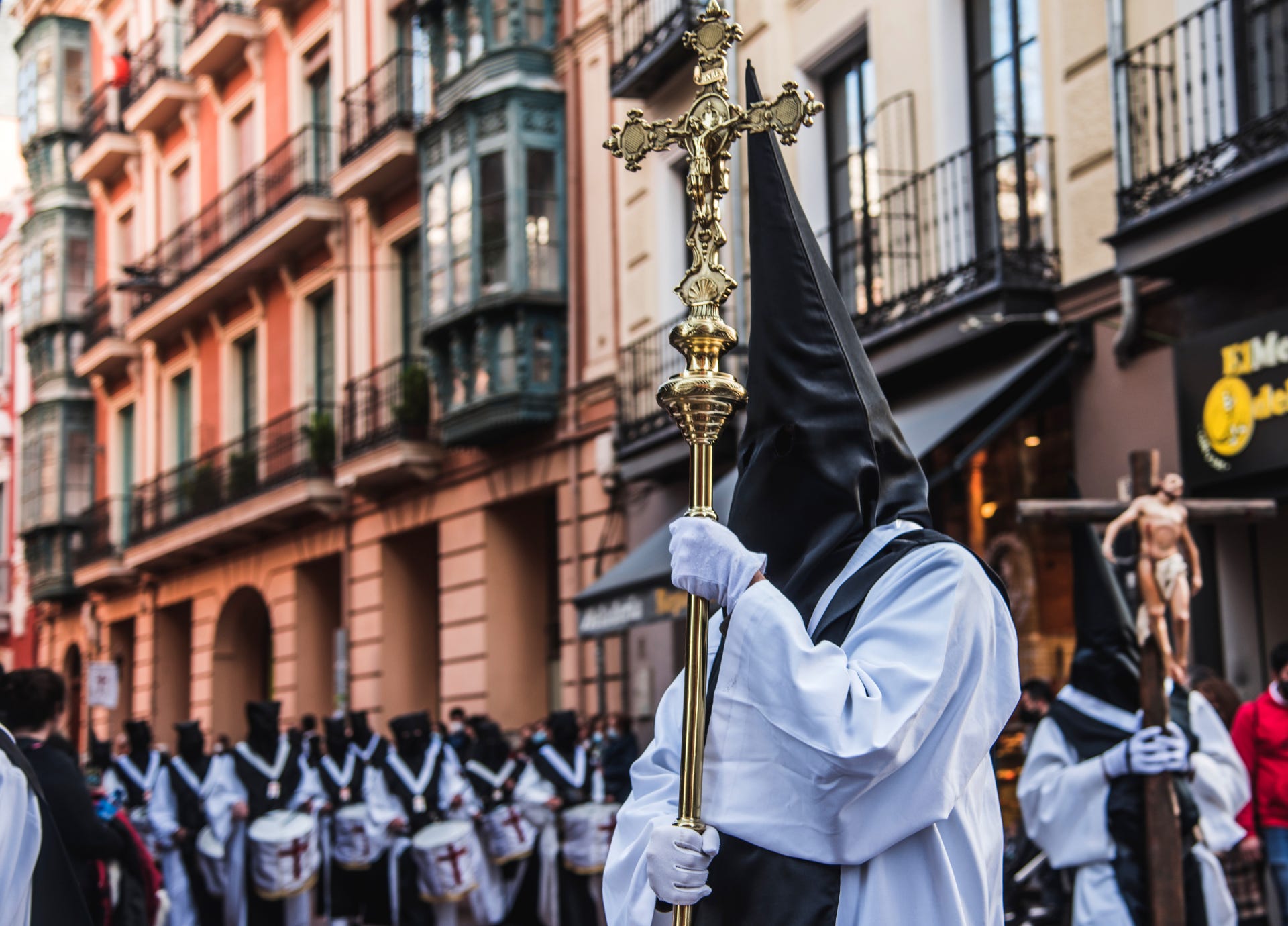
Let’s start with the most visually impactful element: the robes and pointed hoods.
These figures are called nazarenos or penitentes, depending on the local tradition. The pointed hat is called a capirote, and although it may look strange today, its origin is much older than many visitors (and locals) realise.
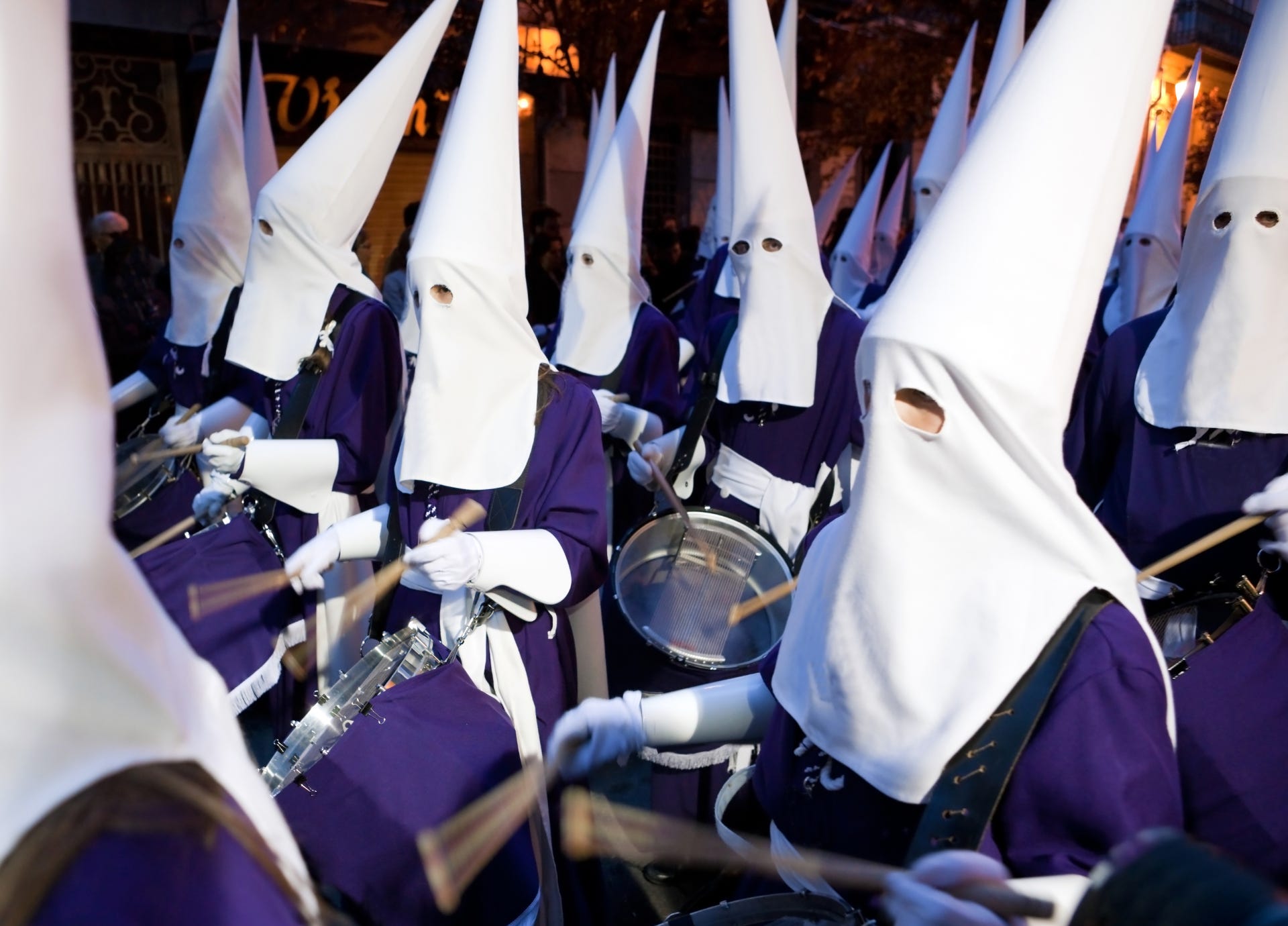
The capirote comes from traditions of public penance in Catholic Spain. The point was not to look elegant or terrifying, but to express humility and penitence. The face was covered so that devotion became anonymous rather than publicly displayed. This meant that the sinner or penitent was not meant to be admired as an individual, but blended with the rest of the ritual.
This is key to understanding Holy Week. The importance wasn’t the individual. It didn’t matter who you were. Under the robe, everyone was the same, just a devoted man. In Spain public devotion was taken very seriously, and this tradition is one of the remains from that time. Faith was expressed collectively and visibly in the streets.
Why are they carrying giant floats through the streets?
In Spain, religion was staged instead of preached in many occasions. Artworks in churches educated people on the teachings of Catholicism, and the great floats of Holy Week are also part of that. They’re called pasos, which means steps in Spanish. They’re among the most impressive parts of the tradition. The pasos are not light parade platforms, but massive and heavy structures that hold sculptural scenes from the Passion of Christ and the sorrow of the Virgin Mary.
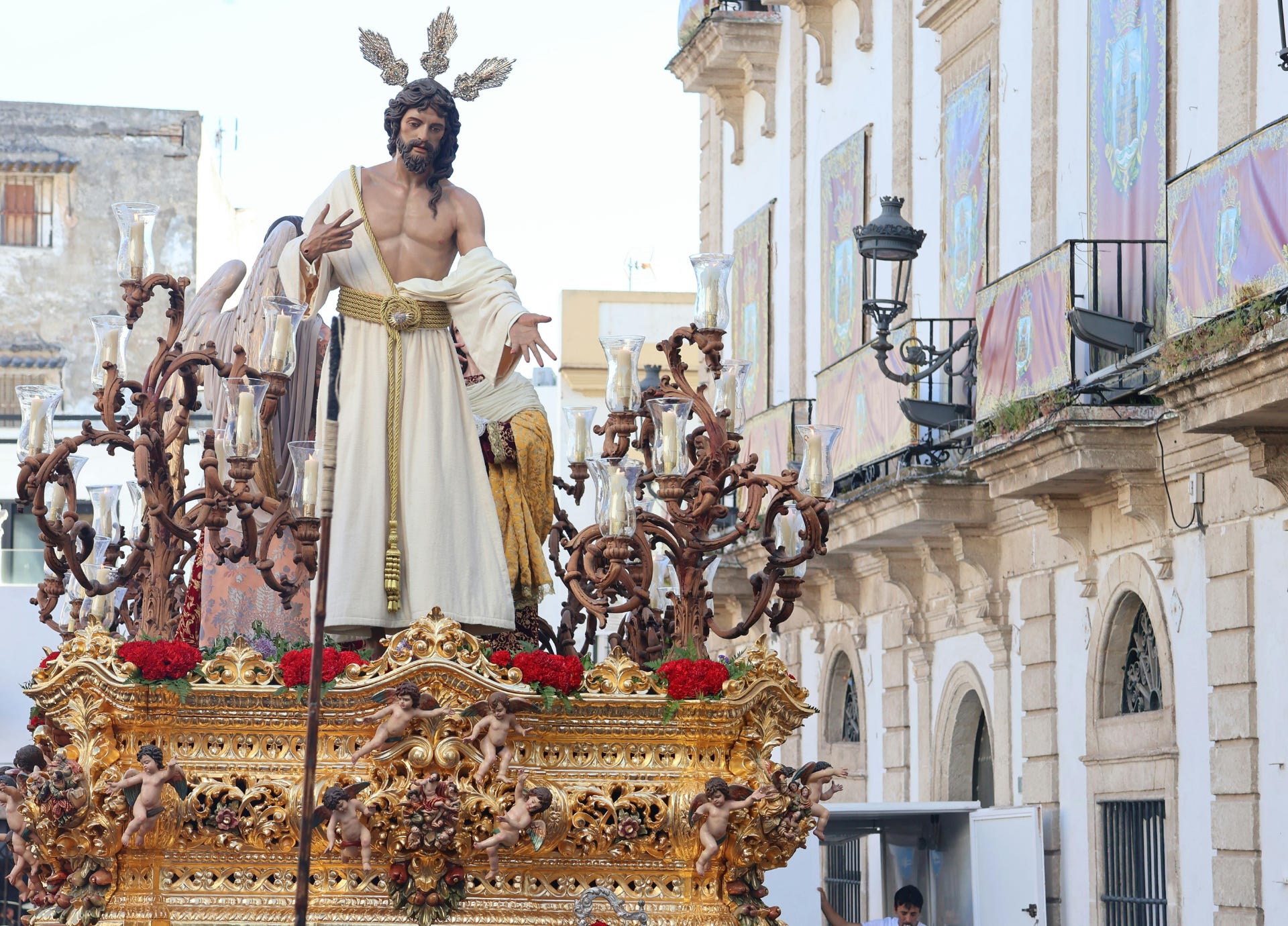
What’s very impressive about pasos is that they’re carried over the paraders’ shoulders, not over wheels. They move in coordinated steps, which is why they get that name. It’s a way of also “suffering” while carrying the floats that display suffering. It shows that there’s an effort behind it rather than a lazy tradition that is done for the sake of it.
In many cases, these floats are tied to centuries-old brotherhoods of Catholics who worship in a specific chapel. And the sculptures displayed, which are taken care of during the year by these brotherhoods and the chapels, can be major works of religious art.
Why is it so intense in Spain?
Spain is a country with a culture deeply shaped by Catholicism. Much of Spain was shaped by Counter-Reformation Catholicism, a form of religion that responded to Protestantism by becoming even more visual and public instead of simpler. Art became a teaching / propaganda resource, as well as the processions.
Religion was meant to be felt rather than read about, this is why Spanish Holy Week is often so immersive. The candles, the drums, the slow movements, the weight of floats, etc… it all belongs to a way of understanding faith that looked at it as a ritual.
Did you experience it?
Have you ever witnessed Spanish Holy Week with your own eyes? It’s something to not be missed, whether you’re a Catholic or not. Not just for the religious side, but for the tradition itself.
Many argue that Americans possess a shallow culture yet perceive it as superior or a global norm. In contrast, Spanish culture is significantly richer and more ancient than the relatively recent American way of life. Historically, Spain has been the most vital defender of Catholicism, standing against Protestant states that forged the 'Black Legend' as part of a geopolitical 'Cold War' against Spanish power. Although Spain may not hold the same global power today, its true wealth remains in its immense heritage. Catholicism—and indeed the rest of the world—owes much to Spain. Those who are unaware should admire the cultural depth of a land shaped by a unique blend of Romans, Arabs, Celts, Visigoths, and Jews.
The weirdest to me is the parade which is entirely Guardia Civiles marching and chanting, carrying the Virgin - is that Malaga? It's much more disturbing than the pointy hats IMHO.